
Prof. Deepti Ganapathy, Management Communications area, on why young Indians are increasingly drawn to this centuries-old pilgrimage
Setting out on the Char Dham Yatra in May 2025 was an interesting quest of genuine spiritual progress, inner peace, detachment, compassion, and realization. This organized sacred Hindu pilgrimage circuit in the Uttarakhand Himalayas comprises four holy sites, the Dev Bhoomi or “Land of God”: Yamunotri, Gangotri, Kedarnath, and Badrinath, that pilgrims visit to seek salvation (moksha) and wash away their sins. The questions that arise are: do these pillars encompass genuine spiritual progress, and how do such yatras or pilgrimages, which millions of devotees undertake every year, add to the collective consciousness of the land of Bharat?
There seems to be an explosion of content connected to spirituality today: the good infrastructure and connectivity around spiritual places, the ability to post pictures and videos to make them look stylish and suave, and with celebrities, business leaders, and influencers adding these places to their chosen travel itinerary – all this has been communicated loud and clear, with a clear call for action. The call was presented in the form of believers and non-believers who made their way, physically, virtually or emotionally, to the Mahakumbh in Prayagraj.
On a recent flight on Air India, the in-flight magazine carried these various perspectives of the Mahakumbh, such as “The Ganga Aarti was inclusive in nature…I saw female priests, draped in brocade silk sarees, equal participants in the spiritual act. It was an uplifting experience…”
Then another read: “We walked and walked for 12 hours on the day of the Paush Purnima (13-14 January) to get to the Sangam around 2 am, before the crowds from the Akhadas (monasteries) began arriving with all their energy and focus to reach the Sangam at the auspicious time. We were glowing inside and out. This was the greatest gathering of people ever…” (a foreign visitor).
While the Mahakumbh mela or festival takes place once every 12 years, the Char Dham Yatra takes place every year, for four months. Plans are afoot to construct ropeways and tunnels, making accessibility to the Dhams an all-weather possibility.
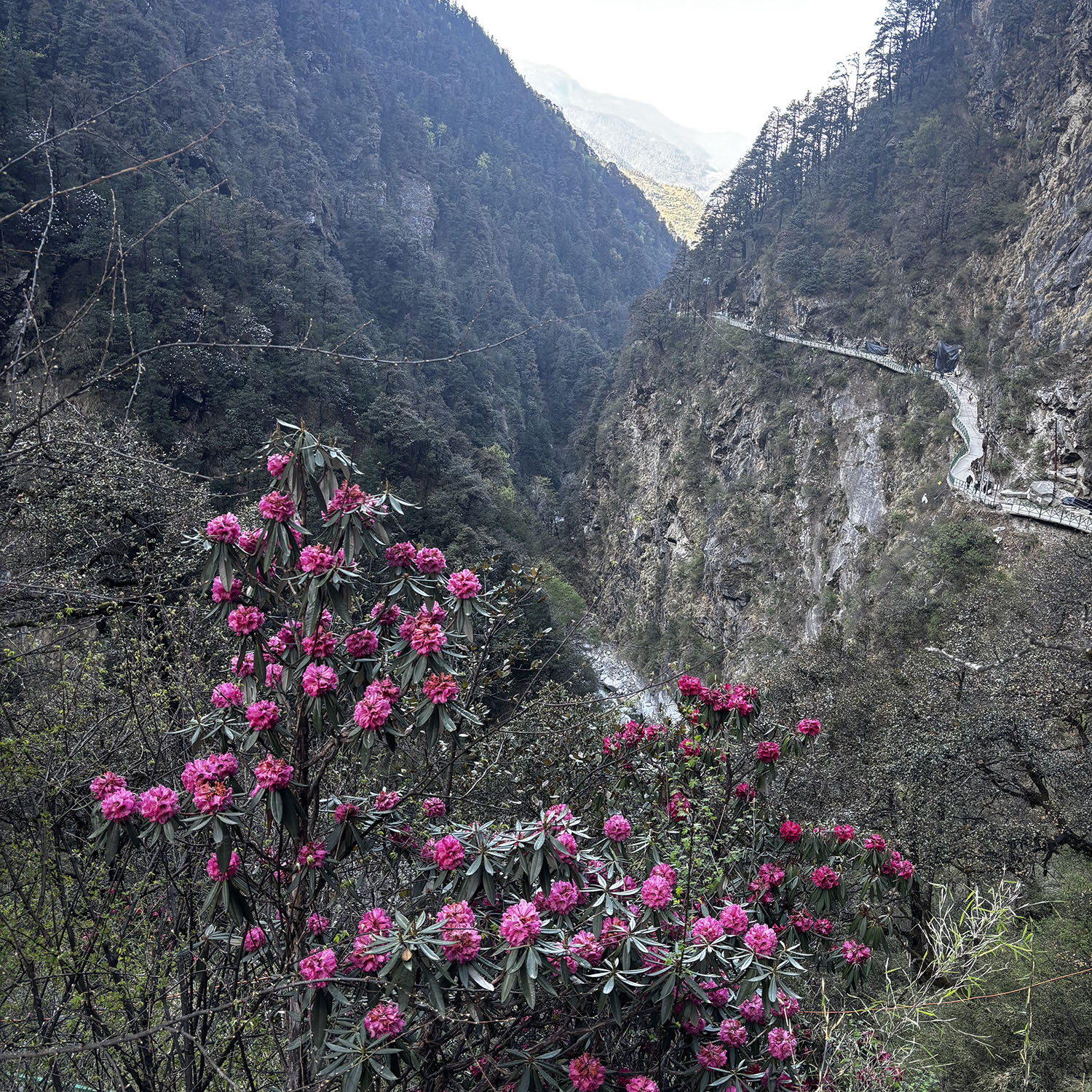
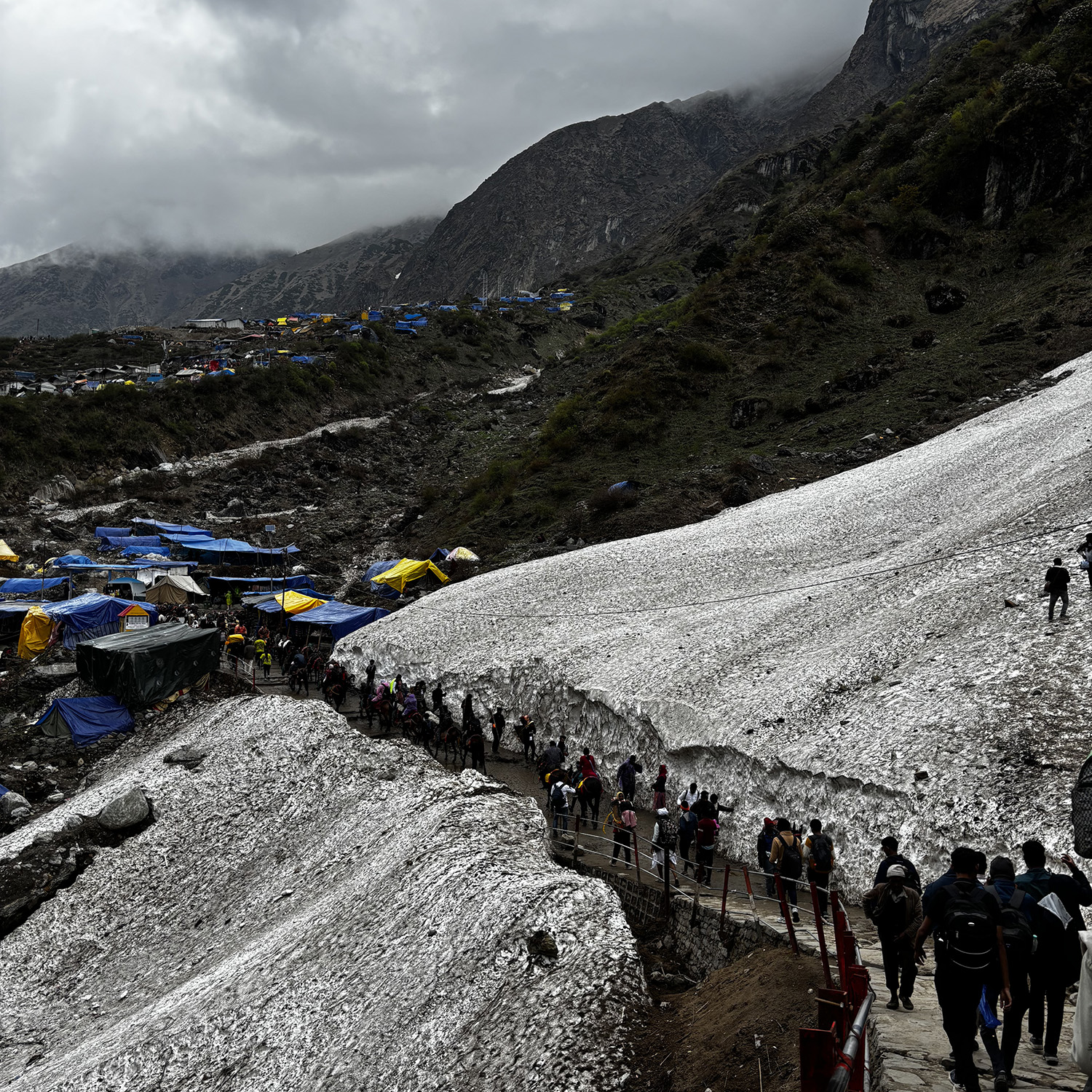
Is India witnessing a spiritual churning, especially with the younger generation planning and making journeys to these Dhams, which were once the circuit of only mendicants and senior citizens? More than three-fourth of India’s population falls in the young demographic bracket of 16-24 years, and we saw this age group with their headphones, loudspeakers with Shiva chants booming through the valley walk up. In Kedarnath, they were sometimes barefoot, sometimes with a trishul or trident in their hands, and some wearing the most expensive hiking boots and outfits.
In Gangotri, young bikers raced up to the shrine to make sure they witnessed the 7:30 pm aarthi or prayers, with their helmets tucked under their arms. At Yamunotri all the boys who carried the palki, or the palanquin of the goddess from her winter abode to the peak, were in their early twenties. They went running up the steep mountain slopes as the “spirit” of the palki held them in her control, leading them to walk in a rhythm that no mountaineer could scientifically explain, since oxygen thins out considerably in the higher altitudes.
Words fail to capture the magnetism that draws young and old, the rich and poor, either on foot, or by ponies and palkis to reach the eternal space of Shiva who resides not just inside the shrine in Kedarnath, but in the mountains around. Part of the third stop of the Char Dham Yatra, every step towards reaching him is taken thoughtfully, meditatively and with utmost awareness.
The alertness and vigilance that come to a yatri, a pilgrim, when walking up towards these Dhams, bring such clarity to the mind that the gurgling rivers that accompany him or her at every Dham, the rivers Yamuna, Bhagirathi, Mandakini and Alakananda, offer a sharp and smooth melody to enable this clarity to remain until the yatra or pilgrimage is completed.
The fresh mountain air offers reassurance, while the eyes seek the soothing sights of nature in its bountiful abundance. Every sense is rejuvenated and refreshed, allowing the yatri to frequently withdraw inward from the delusions and diversions that these senses bring with them. Isn’t this the very idea of detachment that we learn to observe from Shiva? To be compassionate towards other co-travellers and not make a fuss about being amidst too many pilgrims; and thus, find and discover that we are not individuals and ultimately, we need to merge with this collective sense of devotion, to realize God.
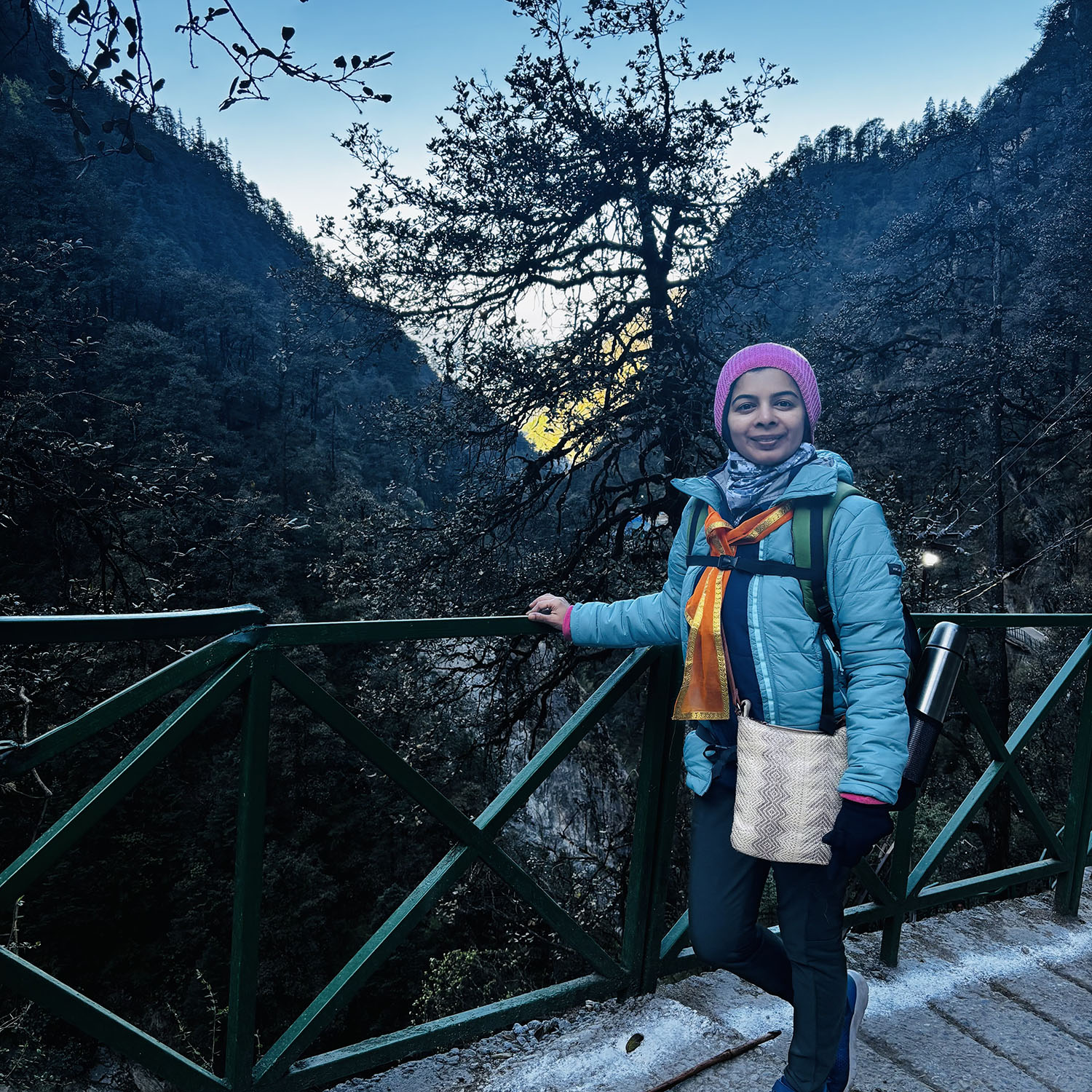
Every step taken on such a yatra is designed with a purpose and it is humbling to see so many devotees experience and relish this perspective. We met many who were coming for the 12th or 13th time since 1996. Does this mean we have to repeat these experiences? Is this what we refer to as sadhana in spiritual practice? Perhaps it is. Because each time we visit, we are different versions of ourselves, we are in different phases of our lives, we can detach from different aspects of our lives depending on the extent of saturation that we have attained from material acquisitions, emotional bonds, or pursuit of power and fame.
Having completed the pilgrimage one also understands that finally, we need not travel physically and mentally to pilgrim places, when we see and invite the Divine to reside within. We can afford to let our soul wander to seek that inner peace that it always there, it only remains to be realized.
(This article was republished with permission from the magazine Samvit, the semi-annual journal of Sri Sarada Math, Volume No. 94, September 2026.)
