
The second leg of the EPGP ’27 immersion lands at ESCP Madrid, diving headfirst into cultural psychology, football empires, sports policy and the next frontier of sustainable hospitality.
The EPGP ’27 cohort that spent the first week of its international immersion at ESCP Berlin has now travelled to ESCP Madrid for the second leg of the programme. Accompanied by Prof. M Jayadev from the Finance & Accounting area, the cohort began its Madrid experience with three days of classroom sessions, industry visits and cultural exploration, with a diverse introduction to Spain that brought together perspectives on culture, sport, history, tourism, sustainability and hospitality.
Day 1: Intercultural Concepts, Football & Spanish Culture
Intercultural Concepts
Day one kicked off with Prof. Marc Oberhauser challenging students to look beneath the surface of global behavior. His session on Intercultural Concepts revealed the invisible ways culture dictates how we think, act and connect.
The session examined how cultural backgrounds influence not only how people see others, but also how others perceive them. Something as simple as a symbol, word, colour or gesture can carry completely different meanings across cultures. For instance, white is traditionally associated with purity, celebration and weddings in many Western cultures, while in India and several other Asian cultures, white is strongly associated with mourning and is traditionally worn after a death.
An interesting aspect of the discussion was the idea that culture is not always defined by national borders. Distinct cultures can exist within the same country, shaped by geography, traditions, communities and even everyday habits. A fun example was Vicks VapoRub, which has a particularly strong presence in South India, where traditional oil massages and practices around applying remedies through massage have influenced how the product is used and perceived.
The session served as a reminder that many behaviours considered “normal” are actually cultural, and that understanding these differences is essential when working, communicating and doing business across borders.
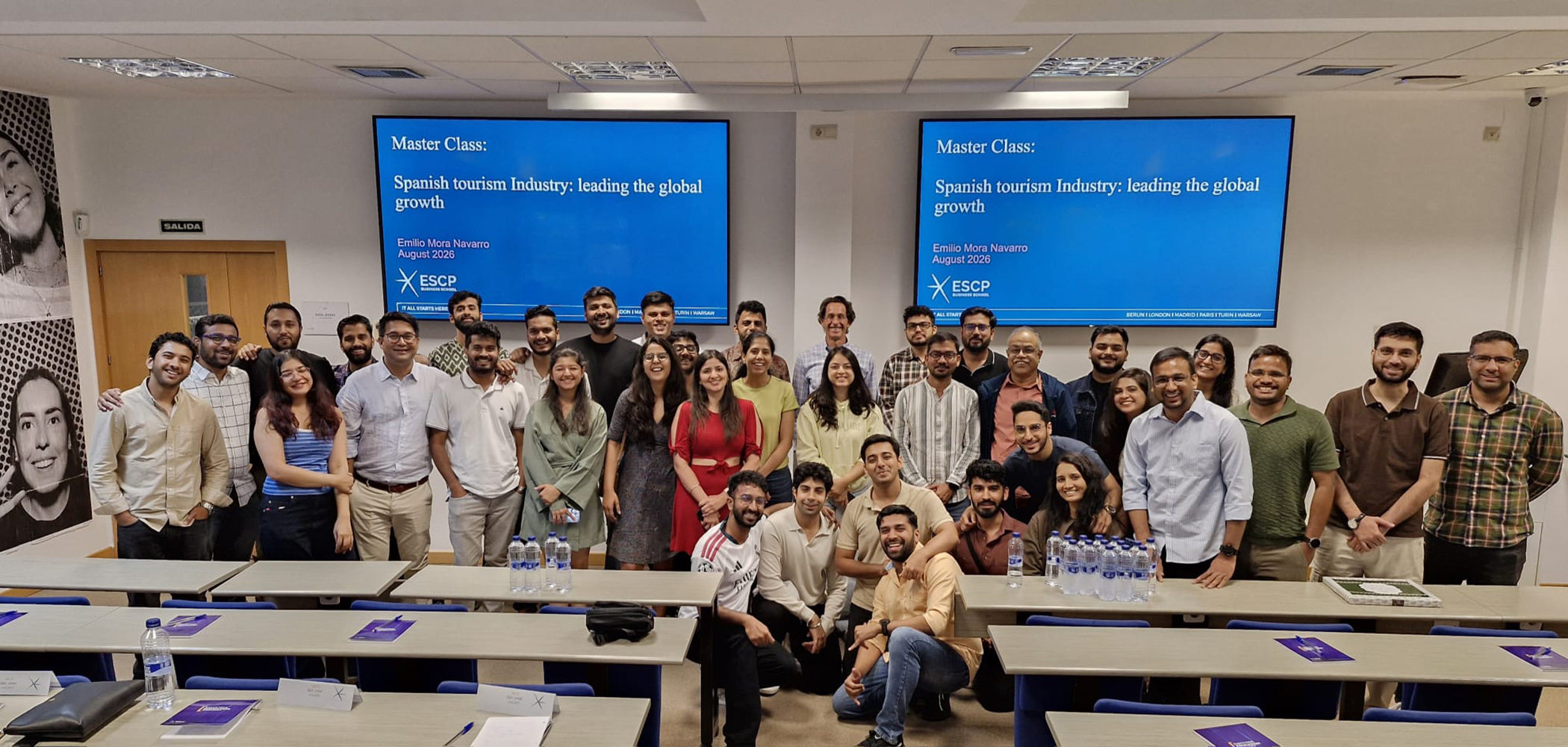 EPGP ’27 learning about the Spanish tourism industry during a lecture at ESCP Berlin.
Santiago Bernabéu Stadium
The cohort traded the classroom for football fever at Real Madrid’s Santiago Bernabéu stadium. Exploring the interactive museum, player locker rooms, and the historic pitch itself proved to be an unforgettable highlight. The visit perfectly captured how football is woven into the very fabric of Spanish culture and everyday identity.
Stepping onto the ground where some of football’s greatest players have played was easily one of the highlights of the day. For a few moments, the classroom disappeared and the cohort was overwhelmed with excitement, joy and a little bit of football fever. It was a fitting introduction to a country where football is not just a sport, but culture, identity and, for many, a way of life.
The day concluded with a special welcome dinner at St. James, offering students their first proper taste of Spanish cuisine and the culture of eating together.
Spanish food is deeply rooted in the idea of sharing, conversation and taking time over a meal. From classic tapas to regional specialties, the cuisine is built around simple, fresh ingredients and bold flavours. It was the perfect way to close the first day: with good food, new conversations and a room full of people beginning to experience Spain together.
Day 2: Headquarters of the National Sports Agency (CSD)
The second day began at the Consejo Superior de Deportes (CSD), Spain’s National Sports Agency and the institution responsible for shaping and supporting the country’s sporting ecosystem.
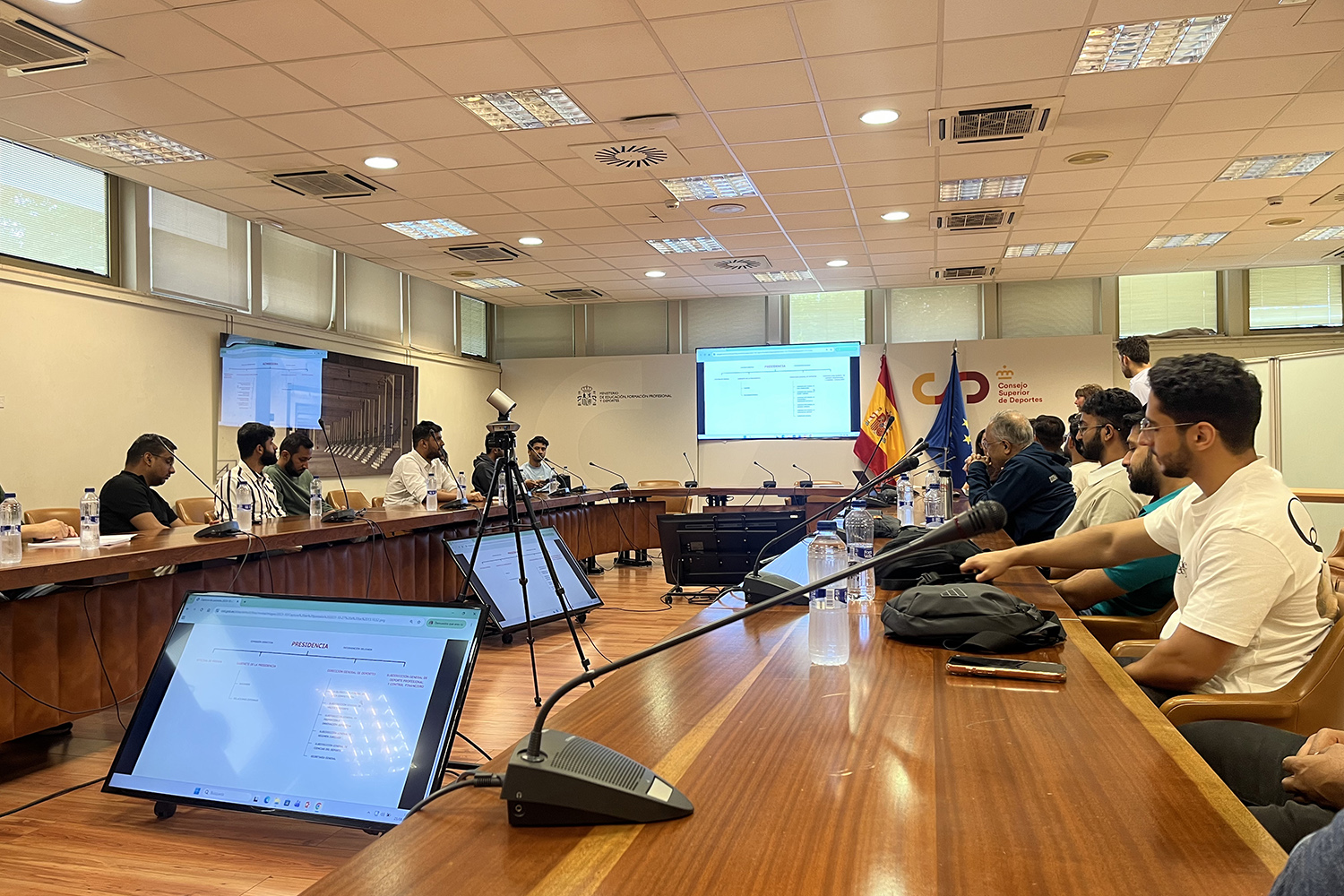 EPGP ’27 at Spain’s National Sports Agency (Consejo Superior de Deportes), exploring the policy behind the country’s athletic success.
The visit gave the cohort a fascinating perspective on what happens behind the scenes of Spanish sport, from elite and grassroots development to sports policy, funding and the country’s approach to building a strong sporting culture.
The cohort explored how sport in Spain goes far beyond professional football, with the CSD working across different disciplines and levels of participation. The discussion also highlighted the role of government and public institutions in creating opportunities for athletes, developing sporting infrastructure and making sport more accessible to society.
What stood out was the opportunity to view sport through a business and policy lens, rather than simply as entertainment. Spain’s sporting success is supported by an ecosystem involving athletes, clubs, federations, public institutions and communities, all working together to create a culture where sport is deeply embedded in everyday life.
Next, the cohort journeyed to Royal Site of San Lorenzo de El Escorial, King Philip II’s monumental 16th-century complex that functioned as a royal residence, monastery, basilica, library and burial site. The students toured the grand quarters, the historic library of ancient manuscripts, and the Royal Pantheon, where generations of Spanish monarchs rest. El Escorial provided the ultimate experience: a deep dive into the historical ambition, power and cultural heritage that built the country.
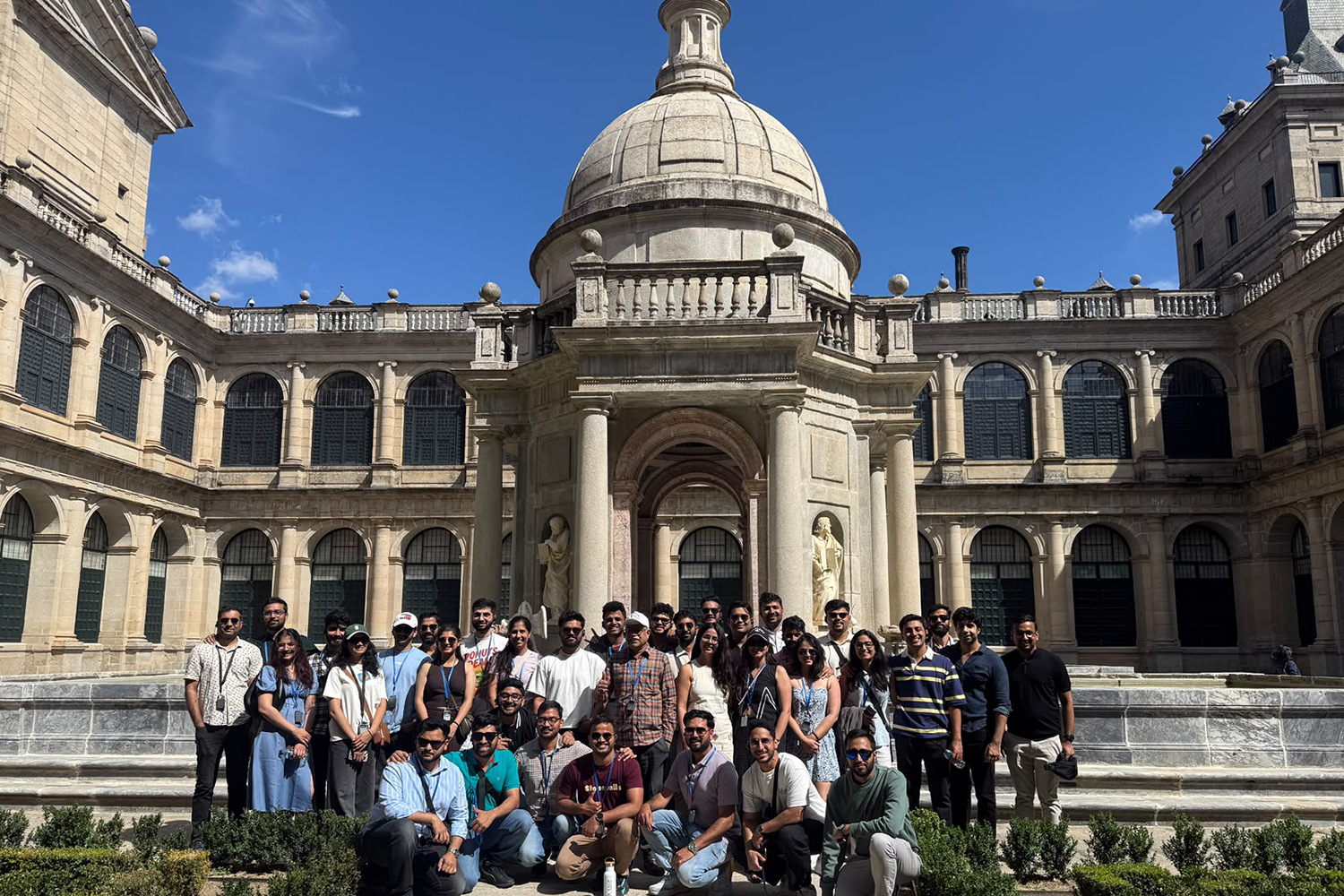 The EPGP ’27 cohort exploring centuries of Spanish culture and royal heritage at El Escorial.
Day 3: Tourism, ESG in Hospitality & MICE Strategy
The third day shifted focus towards Spain’s tourism and hospitality industries, bringing together classroom insights and an industry visit.
The day began with a session led by Prof. Emilio Mora, SVP at Indra and head of its Tourism division. He opened with the numbers: Spain recorded a 30.2% year-on-year jump in international arrivals, reaching 96.8 million tourists, with €4.2 billion invested in 2025.
He contrasted Spain’s tourism model with India’s, where tourism operates on a much larger domestic base that Spain does not have. The session explored tourism as a highly sensitive and interconnected global industry, the rise of “bleisure” (business and leisure), and the growing strain of overtourism on local communities, including rising housing prices driven by foreign buyers.
Using WebBeds, the world’s second-largest bed bank, as an example, the session also examined the distribution layer behind travel and how India’s TravClan mirrors a similar model. The discussion ultimately highlighted the growing intersection of technology and tourism, with Indra’s broader technology footprint spanning sectors from Inditex’s global systems to military radar and air traffic management.
ESG, Hospitality, Technology & Accor
The next session explored the growing importance of ESG in hospitality, with a central message: sustainability is no longer a differentiator, but the baseline.
Driven by the EU’s Corporate Sustainability Reporting Directive (CSRD), the industry is moving from greenwashing to audited, transparent reporting to meet guest and regulatory expectations.
One particularly striking paradox was the relationship between technology and sustainability. While AI can help reduce hundreds of tonnes of food waste, the data centres that power AI consume significant amounts of energy. This means that “digital sustainability” increasingly requires its own audit trail.
Finally, the session introduced Accor’s 4Es framework (Ensure, Empower, Elevate, Engage) as a practical strategy for embedding shared value into daily business operations.
Marriott Hotels: MICE Strategy in Practice
Day three came to an end at the Hotel Marriott Auditorium & Conference Center, where Ana Montejano, Director of Sales & Marketing, took the cohort through Marriott’s MICE strategy.
The experience offered a practical look at how the property’s flexible, modular spaces can be transformed into boardrooms, seminar venues or large conference halls. The commercial team’s role in securing corporate bookings well in advance was also highlighted, ensuring that the space remains consistently utilized.
The visit provided a grounded counterpoint to the day’s ESG discussions, allowing the cohort to see how sustainability goals interact with the commercial realities of running a large hospitality property.
