
Five days in France exploring design thinking, sustainability, luxury, negotiation, entrepreneurship and the forces shaping how businesses create, capture and sustain value
The second cohort of EPGP ’27 continued its International Immersion in Paris from 24th to 28th August 2026, spending its second week at ESSEC Business School. Accompanied by Prof. Ludvig Levasseur, Entrepreneurship area, the cohort moved from the broader business and cultural landscape explored during the first week to questions at the heart of how organizations innovate, compete and grow.
Across five days of classroom sessions, industry engagements and experiential learning, the cohort examined the mechanics of innovation through design thinking, the tensions between sustainability and profitability, the distinctive world of luxury, the preparation and psychology behind effective negotiation, and the structural forces influencing entrepreneurship in Europe. The week also brought these themes into sharper focus through engagements with organizations including VINCI’s innovation and foresight platform, Leonard.
Here is a look back at the second week of the immersion.
Day 6: Designing for innovation, and innovating at scale
The week began with a hands-on exploration of Design Thinking, led by Fabrice Mauléon, senior innovation consultant and international Design Thinking expert. Rather than treating innovation as the pursuit of novelty, the session placed the customer and the problem at its centre.
A key distinction was drawn between invention and innovation: an invention may be new and generate a “wow” effect, but innovation requires that idea to create something people actually value and buy. The timing of an idea, therefore, can be as important as the idea itself.
The students worked through the five-stage Design Thinking process — empathize, define, ideate, prototype and test — represented through the double-diamond framework of divergent and convergent thinking. Particular emphasis was placed on defining the right problem and prototyping quickly. A prototype, the cohort was reminded, is not a finished solution but a means of testing assumptions and learning from feedback.
Working in groups, participants applied the framework to challenges ranging from wine and funerals to multigenerational workplaces and haircuts. They developed user personas, mapped frustrations, defined problems, designed prototypes and tested their ideas with fellow participants.
The afternoon took the conversation from the classroom into the corporate world, with a visit to Leonard, VINCI’s innovation and foresight platform. Kevin Cardona, Director of Entrepreneurial Innovation at Leonard, introduced the cohort to an organization designed to connect one of the world’s largest construction, energy and concessions groups with startups, investors, researchers and emerging technologies.
Leonard operates across several fronts, including foresight, artificial intelligence, incubation, acceleration and investment. Its foresight work examines long-term issues linked to real business challenges, while its AI programme focuses on applications grounded in operational needs. The platform also supports intrapreneurs within VINCI and works with startups at different stages of development.
Among the examples discussed was the development of technology for electrifying heavy trucks through induction charging, alongside initiatives in hydrogen and other emerging technologies. The engagement offered a close look at the challenge of innovating within a highly decentralized organization and at the role of an innovation platform in connecting local entrepreneurial activity to a wider ecosystem.
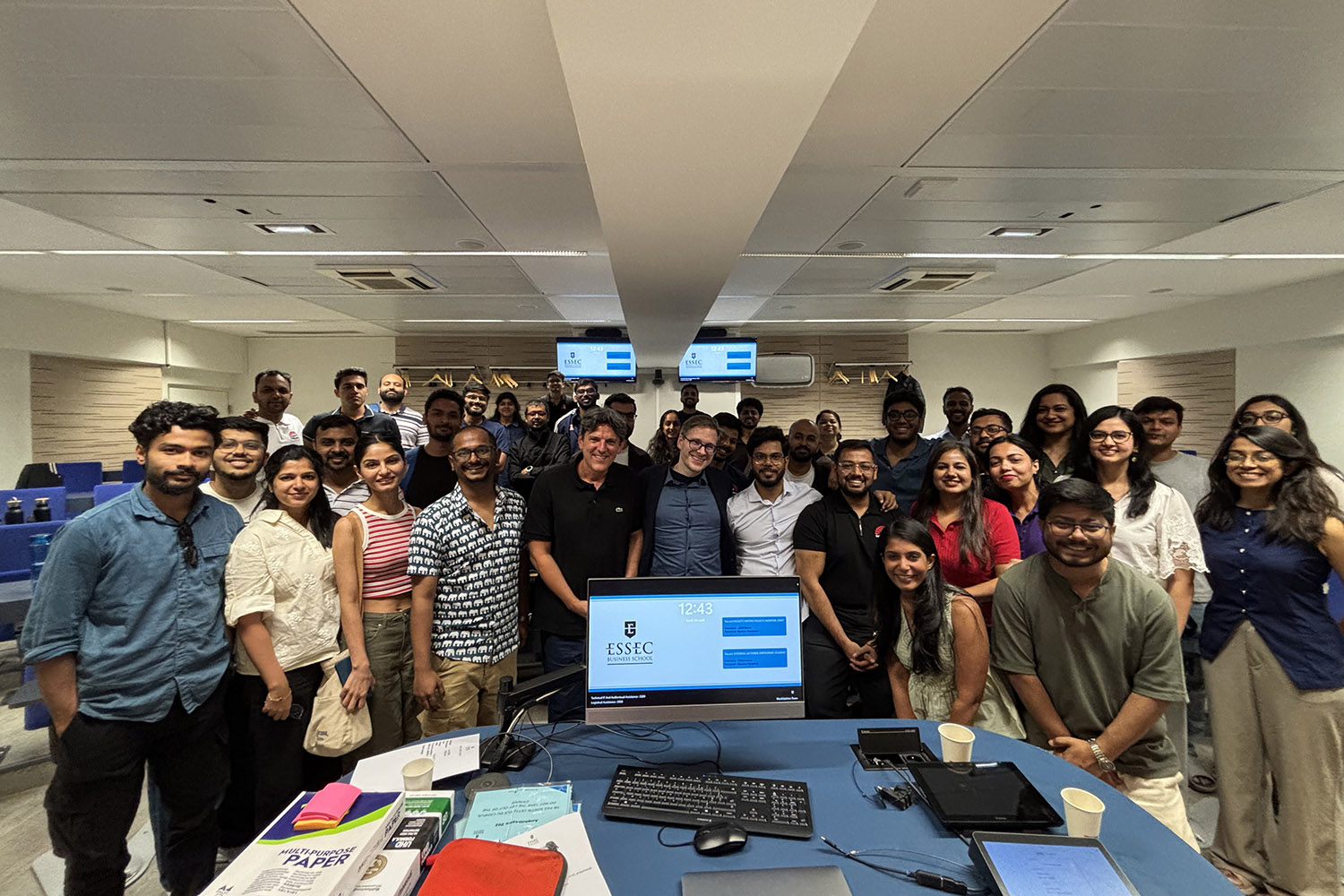 EPGP ’27 during Week Two of their international immersion at ESSEC Business School.
Day 7: The business case and tensions of sustainability
The second day turned to corporate sustainability from a European perspective, with Tommaso Ramus, Professor of Corporate Sustainability at ESSEC, inviting the cohort to examine the subject through a deliberately critical lens. The professor was upfront that he wanted a critical, honest conversation, not idealism, and ran two live polls to place us on a spectrum of what a corporation’s role should be.
The central question was not whether sustainability matters, but how companies can balance creating value for society with capturing value for themselves.
The session explored four broad postures: business as usual (Friedman, the only business of business is profit), reactive (change only when regulation forces you), innovator (build proactive sustainable solutions inside your own business model to win the market), and activist (go further and try to change suppliers, customers and governments too. These positions illustrated the different ways organizations respond to social and environmental pressures — and the trade-offs involved in moving beyond compliance.
The discussion also distinguished between CSR, sustainability and ESG, concepts that are often used interchangeably. CSR is closely associated with managerial values and social responsibility; sustainability is grounded more firmly in scientific questions around planetary boundaries; and ESG focuses on data, measurement and communication to external stakeholders. The distinction matters because reporting sustainability performance is not necessarily the same as changing how a business operates.
The Nike experience provided a case in point. Following criticism over labour practices in its supply chain, the company’s approach to CSR evolved partly as a response to reputational and financial risk. By contrast, the Danone case explored a model built around longer-term relationships with farmers, training, productivity and environmental incentives.
The closing lesson was about tensions and time. Danone’s problem in the case was a leader making a confused “sustainability makes us more profitable” argument, which is short-term framing for something that only pays off long-term. The fix is a clear, consistent business case: pick small, visible short-term wins to build momentum and give sustainability traction, while investing separately in slower, more radical long-term change, and measure the two on different horizons.
Day 8: What makes luxury and what makes innovation possible?
The third day brought together two seemingly different subjects: luxury brand management and generative AI for innovation.
The morning session with Oscar Sand, who brings more than two decades of experience across the luxury and lifestyle industry, examined what distinguishes luxury from conventional branding.
The starting point was that luxury is rarely purchased for functional utility alone. Its value lies in the emotional, symbolic and social meanings attached to a product. This makes brand DNA — its identity, heritage, origins and distinctive codes — central to building long-term value.
Through examples from brands such as Chanel, Dior and Tiffany, the cohort explored how luxury houses create recognizable identities through symbols, colours, patterns, products and stories. The discussion also highlighted the importance of reinvention: heritage may provide a foundation, but it cannot substitute for relevance.
The afternoon’s discussions shifted to GenAI for Innovation, led by Charles Ayoubi, ESSEC professor of innovation and researcher affiliated with Harvard Business School’s Laboratory for Innovation Sciences.
On AI, he sorted media coverage into three attitudes (enthusiasm, fear, and dismissal as hype) and argued the truth sits in between, backing the “it’s real” case with examples like Gemini reaching gold-medal Math Olympiad performance.
A central argument was that the greatest value from a general-purpose technology does not come from simply replacing an existing activity. Electricity, the internet and smartphones each initially replicated existing behaviors before enabling entirely new ones. The same question now applies to generative AI: rather than asking how AI can perform an existing task faster, organizations should ask what becomes possible because AI exists.
The cohort applied this thinking in a live innovation exercise, using AI to identify problems, develop potential solutions and consider implementation. The session placed particular emphasis on continuous learning and the ability to recognize new opportunities as technology reshapes established ways of working.
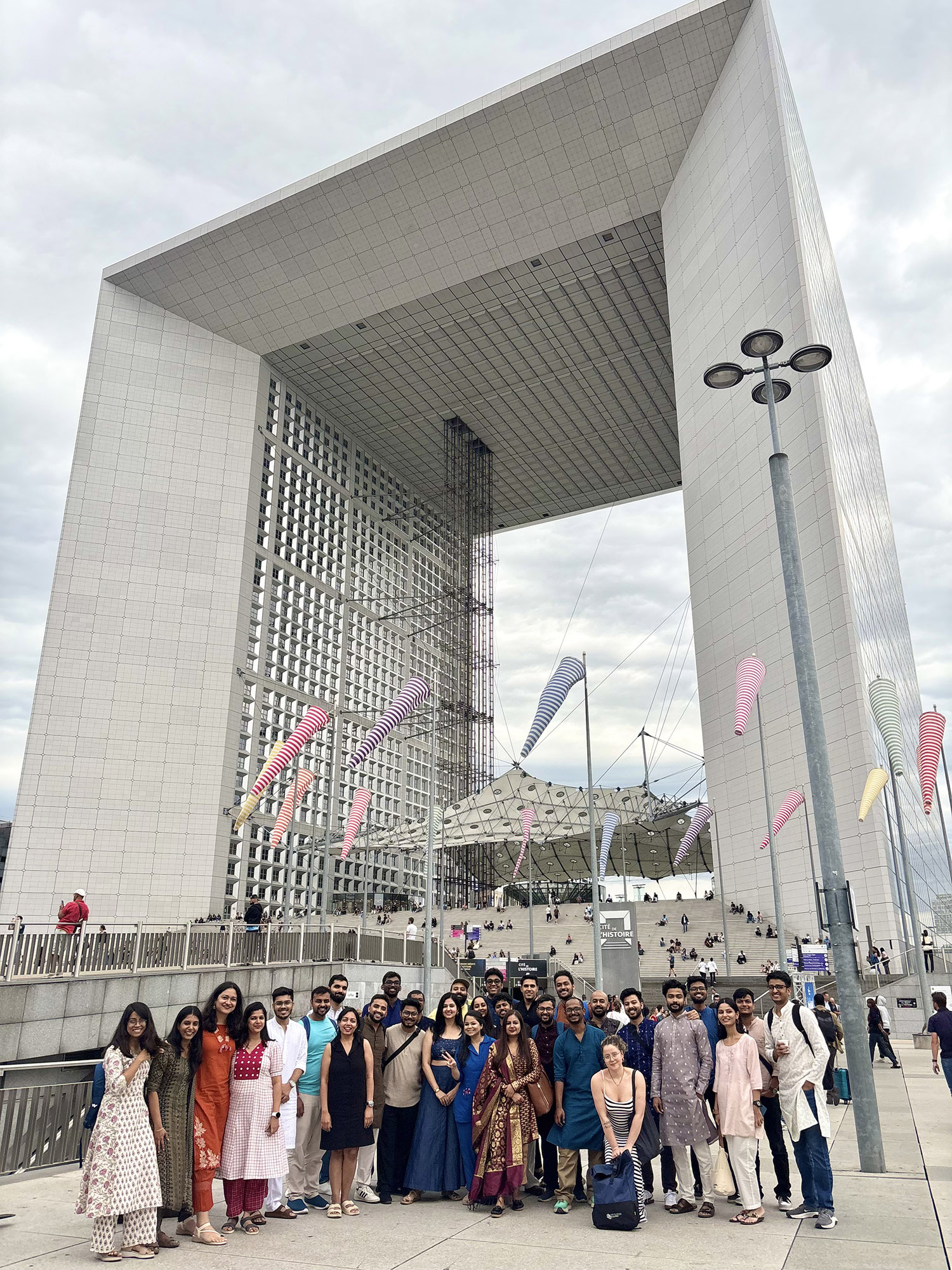 The cohort on an excursion during their immersion in France.
Day 9: The anatomy of a successful negotiation
Negotiation took centre stage on day four, with Alex Issa, a cross-cultural negotiation expert who also conducts training for organizations including the French Ministry of Defense.
The session framed negotiation as an exercise in interdependence: a negotiation exists when neither party can achieve what it wants without the other. Preparation, therefore, begins well before the parties sit across the table.
The cohort explored a framework built around three dimensions: what, who and how.
The ‘what’ concerns the substance: objectives, motivations, possible solutions, objective criteria and leverage. Central to this is the alternative available if an agreement cannot be reached — the stronger one’s fallback option, the greater one’s negotiating power.
The ‘who’ brings the human and stakeholder dimensions into focus. Trust, mandates and the interests of people who are not physically at the negotiating table can all determine the outcome. A discussion of the 2022 Lebanon-Israel maritime border agreement illustrated how an overlooked stakeholder can sometimes unlock years of deadlock.
The ‘how’ concerns process and logistics: establishing an agenda, anticipating questions and paying attention to the physical and cultural details surrounding a negotiation. Historical examples, from the design of the Vietnam War negotiating table to diplomatic dinners, demonstrated how seemingly peripheral choices can carry strategic meaning.
The session concluded with a cross-cultural negotiation simulation, allowing participants to test the frameworks in practice.
The afternoon moved into the world of luxury wine, with Victor Valdanez, Executive Head Sommelier at La Tour d’Argent, offering a perspective on the economics and experience of one of France’s most storied industries.
With a cellar holding approximately 300,000 bottles and 15,000 references, La Tour d’Argent provided an apt setting for examining why some wines command prices many times those of others. The discussion identified six principal drivers of luxury wine value: quality, origin, scarcity, reputation and brand, time, and experience.
The cohort also examined the importance of terroir and provenance in French wine, where the place of production can be as important to the identity of a wine as its grape variety. The distinction between a domaine, which grows and bottles its own grapes, and a négociant, which purchases grapes or wine, offered insight into the business structures underlying the industry.
The session ended with a look at one of the pressures facing hospitality today: rising wine prices and the resulting challenge of maintaining margins without making dining prohibitively expensive.
Day 10: Why Europe creates startups but struggles to scale them
The immersion concluded with Entrepreneurship in Europe, led by Steven H. Seggie, ESSEC professor and researcher of the European startup ecosystem.
The discussion began with a deceptively simple question: why does Europe produce successful startups but struggle to create companies that scale to the size of their American counterparts?
The challenge, the cohort explored, is not necessarily one of entrepreneurship itself. Europe produces a significant share of early-stage startups, but a much smaller proportion of the world’s unicorns. The more difficult transition is from starting a company to scaling it.
One structural reason is that Europe remains a collection of national markets despite the scale of the European Union’s consumer base. Different tax systems, labour regulations, pension structures and business rules can make scaling across borders considerably more complex.
Funding presents another constraint. While early-stage capital is available, later-stage funding can be harder to access, particularly compared with the depth of the US venture capital ecosystem. Cultural attitudes towards failure and risk-taking, as well as the ability to attract and retain global talent, add further layers to the challenge.
Yet the session also examined where Europe may possess an advantage. Regulation, often viewed as a constraint, can become a competitive moat when it establishes standards that extend beyond Europe. The GDPR and the EU AI Act offer examples of how companies built around regulatory compliance can find opportunities in health, fintech and other highly regulated sectors. Green technology, sustainability and strategic independence in areas such as energy and defence also present significant opportunities.
The discussion ultimately pointed towards a broader question: what would it take for Europe to build an ecosystem in which promising companies can move more easily from innovation to scale? Policy that rewards risk-taking, deeper institutional investment in venture capital, greater mobility of talent, stronger IPO markets and a deeper university-to-industry pipeline all form part of the answer.
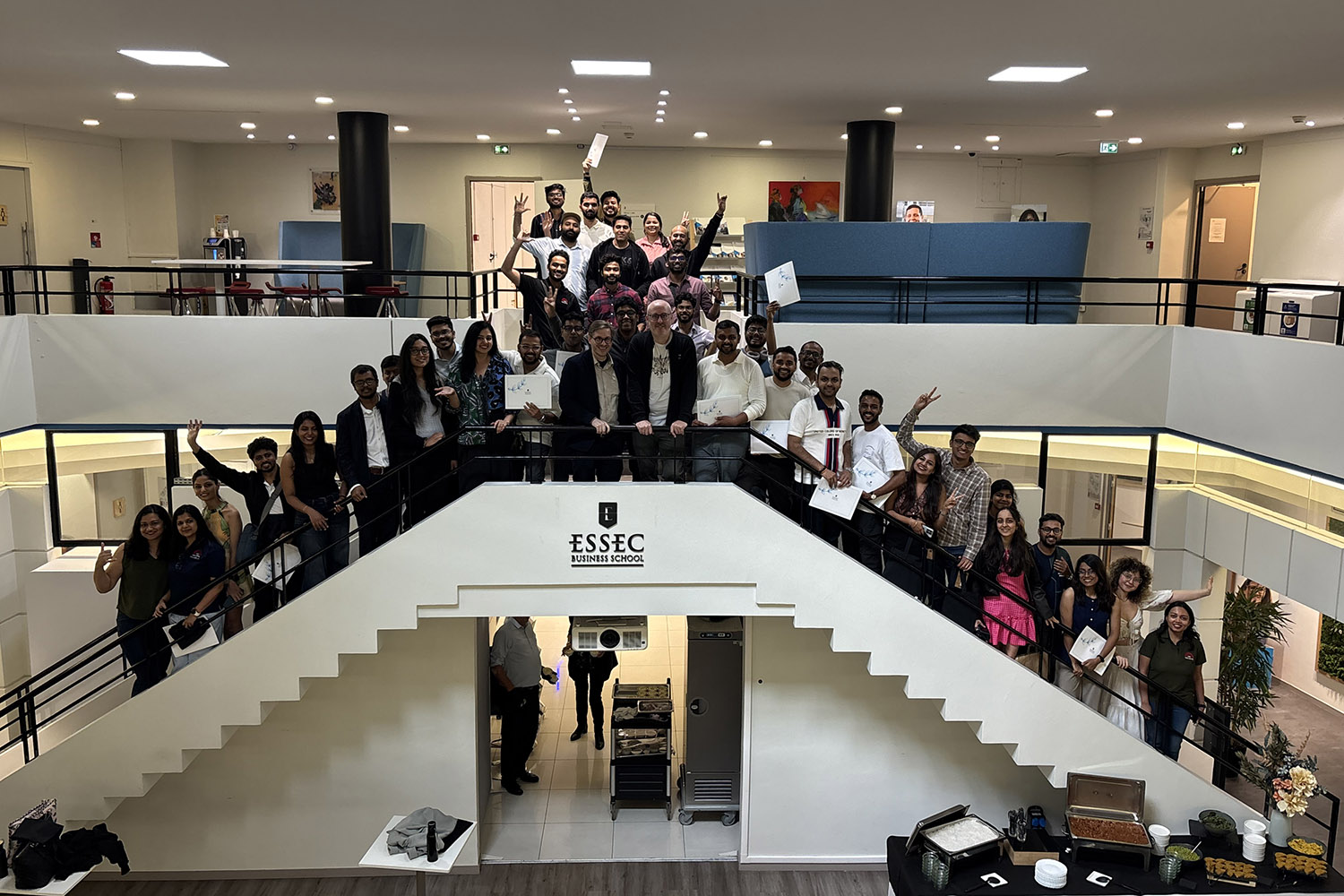 EPGP ’27 on the last day of their international immersion at ESSEC Business School, France.
